
Why Refinishing Your Cabinets Beats Replacing Them
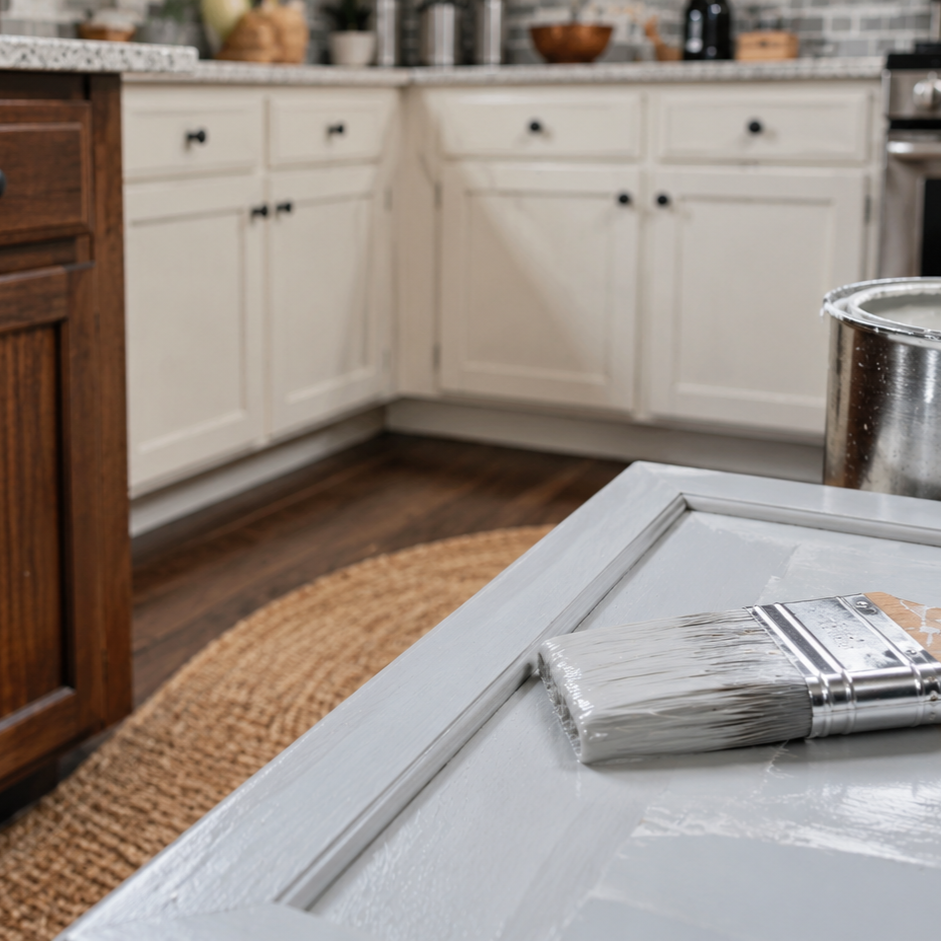
Quick Answer: If your cabinets are structurally sound but look dated or worn, refinishing almost always beats replacing them. Refinishing — cleaning, prepping, and repainting or recoating the existing cabinets and doors — costs a fraction of new cabinets, takes far less time, makes far less mess, keeps your existing layout, and avoids the waste of tearing out usable boxes. Replacement only makes sense when the cabinet boxes themselves are damaged, falling apart, or you want a completely different layout. For sound cabinets that just look tired, refinishing delivers a near-new kitchen for much less.
Your kitchen feels dated, the cabinets are the main reason, and you assume the fix is ripping them out and starting over. That's the expensive assumption. In most kitchens, the cabinet boxes are perfectly solid — it's the finish that's tired, the color that's stuck in another decade, the doors that look worn. When that's the case, refinishing the cabinets you already have gives you a refreshed kitchen for a small fraction of the cost of replacement, with a lot less upheaval. The case for refinishing is strong in most kitchens, and the few cases where replacement is still the right call are easy to recognize once you know what to look for.
The Boxes Are Usually Fine — It's the Finish That's Tired
The key insight is that "I hate my cabinets" almost always means "I hate how my cabinets look," not "my cabinets are falling apart." Cabinet boxes are built to last, and in most homes, they're still structurally sound long after the finish has gone out of style or started showing wear. Replacement throws out those perfectly good boxes along with the dated finish — you're paying to remove and landfill usable cabinetry just to change its appearance. Refinishing separates the two: keep the sound structure, renew the look. That distinction is why refinishing is the smarter choice so often.
Why Refinishing Wins
A Fraction of the Cost
This is the headline. Refinishing existing cabinets costs far less than buying and installing all-new cabinetry, because you're not paying for new boxes, new hardware throughout, demolition, and disposal. You get a dramatically updated kitchen for a small share of the replacement budget, which frees up money for other parts of the project or lets you keep it in your pocket.
Far Less Time and Disruption
Replacing cabinets is a major project — tear-out, installation, often disruption to countertops, plumbing, and walls — that can leave your kitchen unusable for a long stretch. Refinishing is much faster and far less invasive. Your kitchen comes back to you in a fraction of the time, without the construction-zone experience of a full gut.
Less Mess and Less Waste
Refinishing avoids the demolition mess and the dumpster full of torn-out cabinets. It's a cleaner process, and it keeps sound cabinetry out of the landfill — a meaningful environmental win over throwing away usable boxes just to change their color.
Keep Your Layout and Even Change the Color
Refinishing works with your existing layout, which is great if the kitchen functions well and you just want it to look better. And it's not limited to the same color — refinishing can take dark, dated cabinets to a bright, modern white, or any color you want, completely changing the feel of the room without moving a single box.
| Factor | Refinishing | Full Replacement |
|---|---|---|
| Cost | A fraction of replacement | Highest — new boxes, install, disposal |
| Time / disruption | Fast, minimal | Lengthy, major disruption |
| Mess and waste | Low; keeps boxes out of landfill | High; demolition and disposal |
| Layout | Keeps existing layout | Can change layout |
| Best when | Boxes are sound, look is dated | Boxes are damaged or layout must change |
When Replacement Still Makes Sense
Refinishing isn't always the answer, and honesty about that matters. Replacement is the right call when the cabinet boxes themselves are the problem — water-damaged, warped, falling apart, or structurally unsound — because there's no point refinishing a box that's failing. It also makes sense when you want to change the kitchen's layout, add or remove cabinets, or completely reconfigure the space, since refinishing works with what's already there. If the cabinets are truly shot or the floor plan has to change, new cabinetry is worth it. There's also a middle path some kitchens take: refacing, where the boxes stay, but the doors and visible surfaces are replaced, which sits between refinishing and a full tear-out in both cost and scope. But for the most common situation by far — solid boxes wearing a dated finish — refinishing is the choice that makes sense, and it's the one that saves you the most while still giving you a kitchen that looks brand new.
Before assuming you need new cabinets, open and close a few doors and drawers and check the boxes themselves — are they solid, square, and free of water damage? If the structure is sound and only the finish looks dated, you're a refinishing candidate, and you can likely save most of a replacement budget.
Frequently Asked Questions
Yes, by a wide margin. Refinishing keeps your existing cabinet boxes and renews their finish, so you avoid the cost of new cabinetry, full hardware, demolition, and disposal that come with replacement. The result is a dramatically updated kitchen for a small fraction of what new cabinets would cost. As long as the boxes are structurally sound, refinishing provides a dramatic visual change at a fraction of the cost.
Absolutely. Refinishing isn't limited to restoring the same color — it can take dark, dated cabinets to a bright, modern white or any color you choose, completely changing the feel of the room. Combined with updated hardware, refinished cabinets can look essentially new and bring a tired kitchen up to date. Because cabinets are the dominant visual element in most kitchens, refinishing them updates the whole space.
Refinishing is much faster and less disruptive. Replacing cabinets is a major project involving tear-out, installation, and often impacts to countertops and plumbing, which can leave a kitchen unusable for a long stretch. Refinishing works with your existing cabinets and skips the demolition and reinstallation, so your kitchen is back in service in a fraction of the time, without the extended construction-zone experience.
Replace when the cabinet boxes themselves are the problem — water-damaged, warped, falling apart, or structurally unsound — since refinishing a failing box doesn't make sense. Replacement also makes sense if you want to change the kitchen's layout, add or remove cabinets, or reconfigure the space, because refinishing works with the existing arrangement. If the boxes are sound and you just want a fresh look, refinishing is the better value.
When done properly — with thorough cleaning, prep, and quality products applied to sound cabinets — refinished cabinets hold up well to daily kitchen use. As with any painted finish, proper surface prep is key to durability, which is why careful preparation matters. Well-refinished cabinets resist normal wear and can be cared for and cleaned like any quality finish, giving you a lasting, refreshed look for far less than replacement.
Renew the Look, Keep the Boxes
For most kitchens, cabinet refinishing beats replacement because the boxes are still sound and only the finish is tired. Refinishing costs a fraction of new cabinets, takes far less time, makes far less mess, keeps your layout, and can even change the color completely — turning dated cabinets into a near-new kitchen. Replacement earns its place only when the boxes are damaged or the layout has to change. If your cabinets are solid and just look old, refinishing is the smart way to refresh the room for less.
Tired of dated cabinets but not the cost of replacing them? — Get a kitchen-refreshing cabinet refinishing quote from Twin Cities painting pros. Cesar's Painting serves Minneapolis, St. Paul, Bloomington. Call (612) 203-5856.
