
Why Minnesota Winters Make Your Exterior Paint Peel
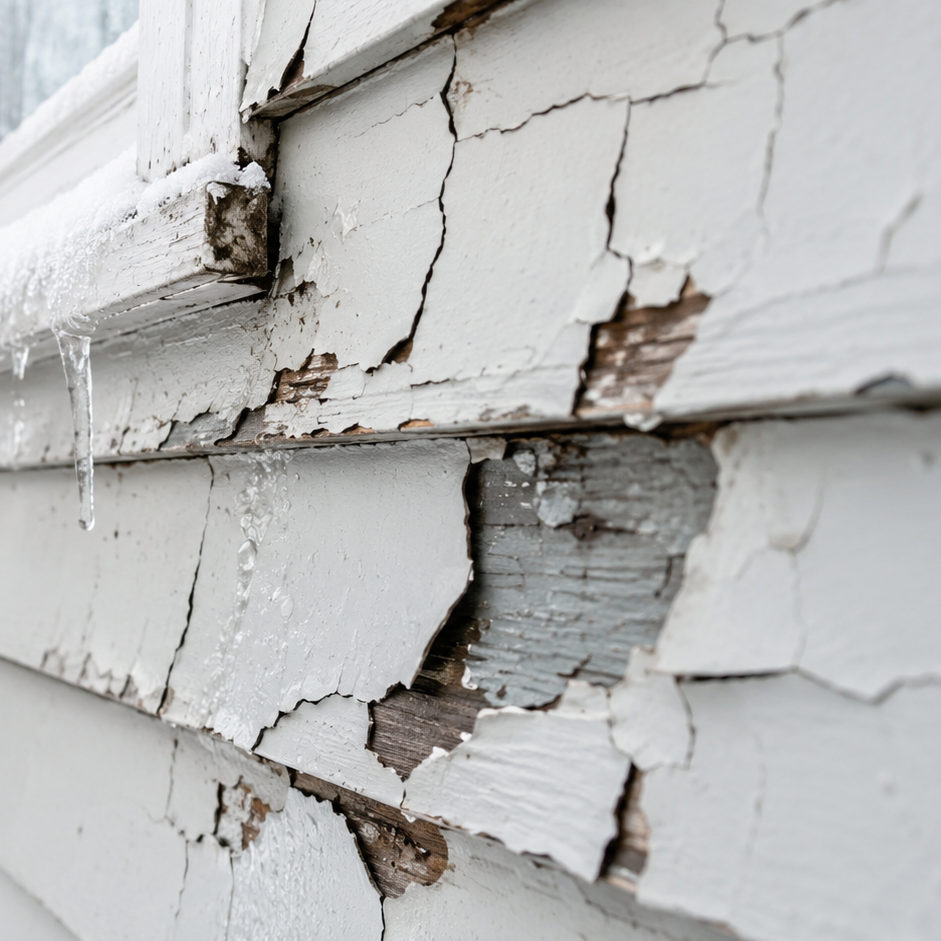
Quick Answer: Exterior paint peels in Minnesota mainly because of moisture and freeze-thaw cycles. Water gets under or into the paint film — from rain, snow, ice dams, or moisture escaping the house — and when it freezes and expands, it pushes the paint off the surface. Poor surface prep (painting over dirt, gloss, or damp wood), skipping primer, low-quality paint, and Minnesota's wide temperature swings all make it worse. The fixes are thorough prep, the right primer and quality exterior paint, controlling moisture, and painting in the right conditions.
Every spring in the Twin Cities, homeowners walk out after the snow melts and find the same thing: paint flaking off the siding, peeling around windows, curling at the trim. It's discouraging, especially if the house was painted not long ago. The cold gets the blame, but the real culprit is what the cold does with water. Minnesota winters combine moisture and freeze-thaw in a way that pries paint right off a surface — and once you understand that you can see why some paint jobs survive, and others don't.
Peeling Is Almost Always About Water and Cold Working Together
Paint fails when it loses its grip on the surface, and in Minnesota, the thing that breaks that grip is water turning to ice. The paint film is meant to seal and protect, but if moisture gets underneath it or into the material behind it, winter does the rest: water expands about nine percent when it freezes, and that expansion pushes outward, lifting and cracking the paint. Repeated through a long winter of freezing and thawing, it peels the paint away. So most peeling traces back to moisture finding its way where it shouldn't, plus the freeze-thaw cycles that turn that moisture into a wedge.
The Main Causes
Moisture Getting Under the Paint
Water is the root of most peeling. Rain and melting snow that sit against siding, ice dams forcing water under the eaves and trim, gutters that overflow onto walls, and even moisture escaping from inside the house through walls can all get behind the paint film. Once water is under the paint, it lifts it from the surface — and then freezing makes it far worse. Controlling where water goes is the first defense against peeling.
Freeze-Thaw Cycles
Minnesota delivers freeze-thaw in abundance. Any moisture trapped in or under the paint, or in the wood behind it, freezes and expands when temperatures drop, pushing the paint off, then thaws and refreezes. Each cycle works the paint a little looser. This is why peeling shows up so dramatically after winter — months of freezing and thawing have pried at every spot where water got in.
Poor Surface Preparation
A huge share of peeling is really a prep failure. Paint needs a clean, dry, sound surface to bond to. Painting over dirt, chalky old paint, a glossy surface that wasn't scuffed, loose flaking paint, or damp wood means the new paint never gets a real grip — and it lets go at the first hard winter. Good prep (cleaning, scraping, sanding, and making sure the surface is dry) is what separates a paint job that lasts from one that peels.
Skipping Primer
Primer is the bonding layer between the surface and the paint, and it's especially important on bare or repaired wood and problem surfaces. Skipping primer, or using the wrong one, leaves the topcoat without a proper foundation, so it's far more likely to peel. Bare wood in particular needs priming before paint.
Low-Quality Paint or the Wrong Product
Cheap paint and the wrong product for the surface don't hold up to Minnesota's swings between hot summers and brutally cold winters. Quality exterior paint is formulated to stay flexible and adhere through temperature extremes; lesser paint becomes brittle and lets go. Using the right exterior-grade paint for the material and climate matters for how long the job lasts.
| Cause | What's happening | The fix |
|---|---|---|
| Moisture under the paint | Water lifts the film from the surface | Control water; fix leaks and drainage |
| Freeze-thaw cycles | Trapped water freezes, pushes paint off | Keep moisture out; quality flexible paint |
| Poor surface prep | Paint never bonds to a clean, dry surface | Clean, scrape, sand, dry before painting |
| No primer | Topcoat lacks a bonding foundation | Prime bare wood and problem surfaces |
| Low-quality paint | Becomes brittle in temperature swings | Use quality exterior-grade paint |
Why It Keeps Coming Back
The reason peeling often returns after a repaint is that the real cause was never addressed. If paint peeled because of a moisture problem or poor prep, slapping new paint over the same situation just sets up the next failure. New paint on an unfixed moisture source, or over a surface that wasn't properly prepped and primed, peels again on schedule. Lasting results come from fixing what lets the paint fail in the first place — finding and stopping the moisture, prepping the surface properly, priming what needs it, and using quality paint — not just recoating over the problem.
Before any repaint, track down where water is reaching the surface — overflowing gutters, ice dams, ground splashback, or interior moisture. Paint is only as durable as the surface and the moisture conditions behind it, so a few dollars of gutter or drainage fixes often protect a whole paint job.
Frequently Asked Questions
Because winter is when moisture and freeze-thaw do their damage. Any water that got under the paint or into the wood behind it freezes, expands, and pushes the paint off, then thaws and refreezes repeatedly over the season. Months of that cycling pry the paint loose wherever water found a way in, so the peeling becomes obvious once the snow melts in spring. The cold isn't the direct cause — the water freezing under the paint is.
It can be. Since moisture under the paint is a leading cause of peeling, persistent or widespread peeling often points to a water source that needs attention — overflowing gutters, ice dams, poor drainage, or even moisture escaping from inside the house. Repainting without identifying and fixing the source usually causes the paint to peel again. Treating peeling as a possible moisture clue, not just a cosmetic issue, helps you solve it for good.
Not if you want it to last. Painting over peeling, loose, or poorly bonded paint — or over an unaddressed moisture problem — just sets up the new coat to fail too. Proper repair means removing the loose paint, prepping the surface (cleaning, scraping, sanding), priming as needed, and addressing any moisture that caused the peeling. That prep work is what makes the difference between a repaint that holds and one that peels again next winter.
Yes — prep is one of the biggest factors in whether exterior paint lasts in Minnesota. Paint needs a clean, dry, sound surface to bond to, and painting over dirt, chalk, gloss, loose paint, or damp wood means it never grips properly and lets go at the first hard winter. Thorough cleaning, scraping, sanding, and priming take time, but they're what give paint the foundation to survive freeze-thaw cycles. Skipping prep is the most common reason paint fails early.
Quality exterior-grade paint formulated to stay flexible and adhere through wide temperature swings holds up best, because Minnesota goes from hot summers to deep-freeze winters. Cheaper paint tends to become brittle and crack or peel in the cold. The right product also depends on the surface — wood, stucco, and other materials have suitable paints. Pairing quality, climate-appropriate paint with proper prep and priming gives the longest-lasting result.
Stop the Water, Keep the Paint
Exterior paint peels in Minnesota winters because moisture gets under the film and freeze-thaw cycles pry it off — a problem made worse by poor prep, skipped primer, and low-quality paint. The cold itself isn't the enemy; the water freezing under the paint is. That's why lasting results come from fixing the moisture source, properly prepping and priming the surface, and using quality exterior paint, rather than recoating under the same conditions. Address what lets the paint fail, and the next paint job survives the winter instead of flaking off in spring.
Paint peeling off your siding or trim again? — Get proper prep, priming, and quality exterior painting that survives Minnesota winters. Cesar's Painting serves Minneapolis, St. Paul, Bloomington. Call (612) 203-5856.
