
How Minnesota Winters Crack and Damage Exterior Paint
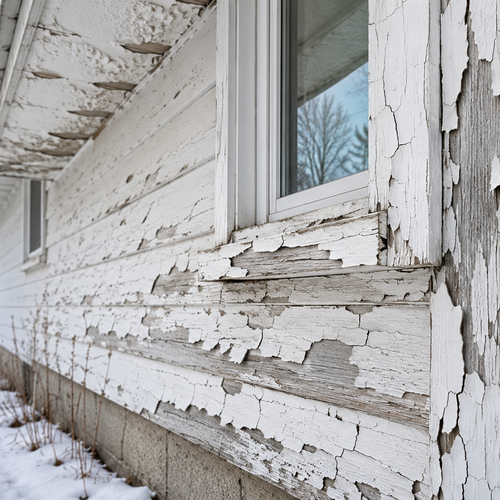
You walk your house's perimeter in April — first real look of the season once the snow finally clears — and the north wall tells you everything you didn't want to hear. Paint peeling in sheets near the foundation. Hairline cracks fanning from the corner of a window casing. The soffit edge under the roofline bubbling in a way it wasn't last fall.
None of that happened overnight.
Every one of those problems started somewhere between October and March. Six months of freeze-thaw cycling, humidity swings, ice dam water, and UV working against your paint film. The damage builds invisibly. Spring just makes it impossible to ignore.
Knowing what actually happens to exterior paint through a Minnesota winter helps you read the warning signs correctly — and decide whether spot repairs will hold or you're looking at a full repaint.
Why Freezing Temperatures Crack Paint from the Inside Out
The most destructive force working against your exterior paint isn't cold itself — it's the cycle of freezing and thawing. Over and over, all season long.
Here's what happens. Exterior paint films aren't perfectly sealed, even when they're in good shape. Years of normal weathering open micro-pores and hairline gaps in the film. Fall rain and snowmelt push moisture into those openings, into the wood underneath, and into any cracks in caulk at window frames and trim joints. When temperatures drop below 32°F, that trapped water freezes — and expands by roughly 9% in volume. Ice wedges the paint film away from the substrate. Temperatures climb back above freezing, the ice melts, and the paint contracts — but not all the way back. The gap is slightly wider than before. The next freeze opens it a little more.
A Twin Cities winter runs 30 to 40 freeze-thaw cycles between October and March. Each one is a small mechanical event. Add them up, and they accomplish what no single cold snap ever could.
Think of it like paint on a freezer-bound water bottle: it holds fine, right up until the bottle expands. Then the corners start lifting.
Water expands approximately 9% in volume when it freezes. Even a small amount of trapped moisture beneath a paint film can generate enough force to separate paint from wood through 30–40 repeated winter cycles.
What Happens to the Paint Film Itself in Cold Weather
Paint type matters more than most homeowners realize. Acrylic latex paints stay flexible at low temperatures — their formulation is designed to move with the substrate as it expands and contracts. Oil-based paints go rigid well before 20°F. That's why older homes repainted with oil-based products in the 1970s and 1980s crack in brittle, straight lines rather than the more irregular peeling you see in latex failures.
But even quality acrylic latex starts losing its flexibility below about 20°F. Wood is moving constantly through this entire period — absorbing fall moisture and swelling, then contracting sharply as indoor heat and winter dry air pull that moisture back out. The paint film is stretched over a moving substrate day after day. Seams at window casings, door frames, horizontal lap siding joints, and corner boards crack first, because those are points where two materials meet and move at slightly different rates.
By April, every crack you find at those joints represents dozens of compression and tension cycles the paint couldn't handle.
Why North Walls and South Walls Fail Differently
Not every side of your house takes the same hit, and the failure mode changes depending on orientation.
The north wall gets minimal direct sun from October through March. It stays cold longer each day, holds frost longer, and stays wet after precipitation when the south-facing walls have already dried. Moisture-driven freeze-thaw damage is what gets north walls — peeling in sheets or large patches, starting near grade where moisture exposure is highest.
South-facing and west-facing walls face a different problem. South walls catch direct summer sun for up to eight hours daily, and UV breaks down acrylic paint binders faster than anything else. West walls take afternoon sun in summer and afternoon wind in winter — rough from both sides. When the binder breaks down, you get chalking: drag a finger across the wall and white residue comes off. That chalking means the resin is gone, and what's left is loose pigment. A chalked surface is porous in all the places it used to be sealed, so the next winter hits an already-compromised film.
North walls peel. South and west walls chalk, blister, and fade. Both need work — just for different reasons.
Ice Dams and What They Do to Soffit and Fascia Paint
Ice dams happen when heat from a poorly insulated attic melts snow near the roof ridge, sending water running toward the eave. At the eave — where the roofline extends past the heated building envelope — temperatures are cold enough to refreeze it. The dam builds. Water backs up and works its way under shingles, into sheathing, and eventually into the fascia and soffit boards.
Soffit and fascia are wood. They absorb that water.
When ice dam water saturates fascia boards from behind, the moisture has only one way out — through the paint film. You'll see blistering along soffit and fascia edges, often in lines that track the roofline. The bubbles feel hollow. Pop one and the wood underneath is damp, even in April when everything else has dried out. That water has been sitting there since January.
Blistering on soffit and fascia isn't a paint problem on its own. It's a sign the wood has been wet long enough that checking for rot — soft spots, discoloration, surface that crumbles when you press on it — is worth doing before anything gets repainted.
The Five Warning Signs to Look for in Spring
Walk your house once snow has fully clearedm and surfaces are dry. Here's what each failure mode looks like and what's behind it.
Peeling or flaking paint near grade or on north-facing walls means freeze-thaw moisture broke the bond. Painting over it traps the failure underneath. The section needs scraping to a stable edge, priming, then recoating.
Hairline cracks at window and door casings, corner boards, or along horizontal siding seams indicate thermal cycling stress at joints. Caulk inspection comes first here — that's usually where the failure started.
Chalking on south or west walls — the powdery residue you can wipe off with a finger — is UV binder breakdown. A chalked surface has to be cleaned and primed before new paint has any chance of sticking.
Blistering along the soffit and fascia edges points to ice dam water infiltration. Check the wood for rot before repainting.
And rust staining below metal fixtures — nails, flashing, exterior hardware — means the coating has failed far enough to let moisture reach bare metal. The stain is cosmetic. What's behind it isn't.
How Damage Accumulates Year over Year
Winter paint damage doesn't reset. It compounds.
A hairline crack from last February is slightly wider next February. Chalking on the south wall shaves a little more film thickness off each season. The fascia section that started blistering is softer this spring than it was last spring.
Most exterior paint on a Twin Cities home is rated for seven to 10 years. The freeze-thaw load here compresses that window. A paint job applied over a chalked surface that wasn't primed, or over wood that was already moisture-compromised, can start failing within two to three winters. One applied correctly over properly prepped surfaces can run the full rated lifespan.
What matters most isn't how old the paint is. It's whether the film is still intact — whether moisture can get in. Once that barrier is breached, every winter moves faster from there.
Frequently Asked Questions
North-facing walls stay wet longer after precipitation and dry out more slowly between freeze events. They go through more effective freeze-thaw cycles per winter than any other wall, which is why moisture-driven peeling concentrates there. South and west walls tend to fail from UV degradation and chalking instead.
The Twin Cities averages 30 to 40 freeze-thaw cycles between October and March — days where temperatures cross the 32°F threshold at least once. Each cycle puts mechanical stress on the paint film, particularly at joints and anywhere with trapped moisture.
Painting over peeling paint traps the failure under the new coat. Within one or two seasons, the new paint peels along with the old. Proper repair requires scraping all loose material down to a stable edge, spot-priming bare surfaces, and then recoating.
100% acrylic latex exterior paint outperforms oil-based formulations in cold climates because it stays more flexible at low temperatures. Premium products like Benjamin Moore Aura Exterior (rated for application down to 35°F) or Sherwin-Williams Emerald Exterior are worth the cost on a house that faces repeated freeze-thaw stress.
Blistering that follows the roofline — hollow-feeling bubbles along the soffit edge — is the telltale sign. The paint film is being pushed off from inside by moisture that saturated the wood during ice dam events. Press on blistered soffit paint: if the wood underneath feels soft or spongy, the wood has been wet long enough to warrant closer inspection for rot.
If damage is confined to a single wall or specific sections — one run of fascia, a few window casings — spot repair and repainting those areas is reasonable. If chalking is widespread across multiple walls, peeling covers more than 20–25% of the total surface, or the paint is at or past the seven-year mark and showing multiple failure types, a full repaint holds better than patching because the film quality is declining across the board.
Cesar's Painting handles exterior painting and winter damage repair across Woodbury, Maplewood, St. Paul, Minneapolis, Bloomington, and the Twin Cities metro. We assess the actual failure mode before any prep begins — so the repaint holds through Minnesota winters instead of repeating the same damage cycle. Call (651) 650-4747 to schedule a free estimate.
