
Will New Exterior Paint Boost Your Home’s Appraisal?
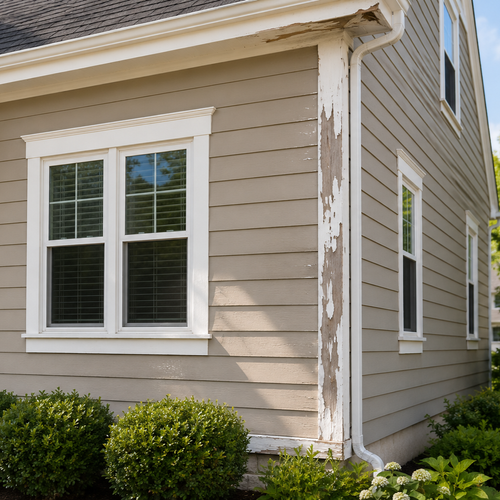
The appraiser pulls up, steps out of the car, and starts writing before they've crossed your front yard. Not notes from the previous house. Notes about yours. The south wall has gone chalky and dull — UV's been grinding away at that paint film for years. There's a stripe of peeling paint under the east eave where moisture got behind the film. Trim around the front window has faded from crisp white to speckled beige. None of it is structural. But that first impression is already shaping the questions they'll ask for the next hour.
That's the real story with exterior paint and appraisals. It's not the dollar cost of a gallon of paint versus a flaking chip. It's the conversation a peeling exterior starts — and the one a well-maintained paint job prevents.
How Appraisers Actually Read Exterior Condition
Home appraisers don't add a line to the report that says "fresh paint job: +$4,500." That's not how residential appraisals work. For conventional mortgages and most refinances, appraisers assign a condition rating — C1 for new or fully renovated, down to C6 for significant deferred maintenance and real problems. That rating shapes which comparable sales they pull. And it shapes how those comps get weighted.
A house that rates C3, meaning well maintained with limited deferred maintenance, gets compared to other C3 homes in the area. One that dips to C4 because of obvious exterior neglect gets compared to C4 comps. In most Twin Cities neighborhoods, the gap between a C3 and C4 comparable sale runs somewhere between $10,000 and $25,000. That's real money, and it shifts based on condition signals the appraiser reads on the walk-up.
Peeling or badly oxidized paint is one of the most common triggers for that downgrade. Not because of the paint itself — because of what failing paint implies. An appraiser who sees paint failing on the south wall knows south-facing exposures take the hardest UV load. They know paint fails there first when moisture vapor is pushing out from inside the wall assembly. They start wondering what's underneath. That doubt doesn't go away because you tell them the siding is fine.
What a Solid Paint Film Signals
A clean, intact paint job reads the way a well-maintained car reads at a dealership. Not "this car is exceptional" — but "this car wasn't neglected." And that absence of neglect signals that other maintenance probably happened on schedule too. The roof wasn't patched with roofing cement and abandoned. The windows got re-caulked before water found a way in.
Fresh paint doesn't make an appraiser add value. It removes doubt. That removal of doubt has real dollar value, because the alternative is that the appraiser adjusts downward to account for uncertainty about what the exterior is hiding.
Paint is a barrier, nothing more. When it's intact, it takes the hit so the wood underneath doesn't have to — sun, rain, the freeze-thaw grind of October through March. When it starts peeling, all of that goes straight to the substrate. An appraiser who sees a sound surface assumes there's something worth protecting. One who sees failures starts looking harder for what's wrong.
There's also a comparable-selection effect. When an appraiser searches for comps, they try to match condition. If your house is freshly maintained and the best available comp has weathered paint on the gable ends, the appraiser may adjust that comp downward to reflect the condition difference — or find a closer match that supports a higher number.
When Painting Has the Most Appraisal Impact
The impact depends entirely on where your house sits on the condition scale right now. A house already holding at C3 that gets repainted stays C3. The appraiser notes the maintenance and moves on. A house drifting toward C4 because of obvious exterior neglect is a different situation entirely.
Before a refinance
A cash-out refi or rate-and-term refi triggers a full appraisal, and that appraisal assigns a condition rating exactly the same way a purchase appraisal does. A house built in the 1970s and last painted in 2010 has 15 winters on that paint film. Freeze-thaw cycling from October through March drives moisture through any weakness in the film and pulls paint off at seams and edges. Painting before the appraisal appointment — at least 30 days before, so the film has fully cured — is one of the lowest-cost ways to protect appraised value on a refi.
Before listing for sale
Most listing agents quote a 50–100% return on exterior painting relative to what the job costs. It pencils out not because buyers pay some fixed premium for painted houses. It pencils out because peeling or faded exteriors shrink the buyer pool, invite lower initial offers, and hand the buyer's inspector a tool to push for credits. Fresh paint closes those gaps before the negotiation starts.
After an FHA or VA appraisal flags the condition
FHA and VA loans carry minimum property condition requirements stricter than conventional. An FHA appraiser will flag peeling exterior paint as a repair condition — especially on homes built before 1978, where lead paint is a recognized hazard. The loan can't close until the repair is done and the appraiser confirms it. If the buyer is using FHA or VA financing, addressing the exterior before the appraisal isn't optional.
FHA appraisers are required to call out deteriorating exterior paint on homes built before 1978. The flagged area has to be repaired, repainted, and reinspected before the loan closes — a delay that costs both sides. If your house was built before 1978 and the exterior is peeling, get it addressed before the appraisal appointment.
What Appraisers Flag vs. What They Overlook
Not every exterior paint issue lands the same way in an appraisal report. Here's how the most common conditions tend to be treated:
| Exterior condition | How appraisers typically treat it |
|---|---|
| Peeling or flaking paint on siding or trim | Often triggers C4 flag; FHA/VA may require correction before close |
| Heavy chalking or oxidation on siding | Noted as deferred maintenance; pulls rating toward C4 |
| Bare wood with no paint film | Flags substrate moisture risk; may require repair condition |
| Fresh paint, sound film throughout | Supports C3 rating; no notation required |
| Faded paint with intact film | Usually noted but rarely changes the rating alone |
| Color the appraiser finds dated | Not relevant — appraisers assess condition, not aesthetics |
One pattern stands out in that table. It's the integrity of the paint film — not the color, not the age — that drives the rating. A house painted ten years ago in a color that's out of fashion, with a solid intact film and no peeling, is in better appraisal shape than one freshly painted in a popular color but with bare spots at the corners where prep got skipped.
The Numbers Behind Exterior Painting ROI
Industry ROI figures for exterior painting vary because they depend on the local market, the house's starting condition, and what nearby comparable sales look like. The National Association of Realtors' Cost vs. Value reports have consistently placed exterior repainting among the higher-return projects for sellers — with reported figures ranging from 50% to over 100% in some editions and regions.
Here's a more useful way to think about it: what does a paint job cost, and what does a condition downgrade cost?
A full exterior repaint on a typical two-story house in the Twin Cities runs roughly $3,500–$6,500, depending on prep requirements, number of colors, substrate condition, and accessibility. A condition adjustment from C3 to C4 comps in a stable neighborhood often represents $15,000–$25,000 in appraised value. The math isn't hard when the condition gap is real.
Don't expect painting alone to close the gap between C3 and C4, though. It rarely does. If your house has peeling paint, it probably also has worn caulking at the windows, soft fascia boards at the eaves, and a gutter that's been sagging for two seasons. Appraisers look at the exterior as a system. Painting while leaving everything else deferred improves the picture without necessarily moving the rating.
| Condition factor | Typical C3 appearance | Typical C4 appearance |
|---|---|---|
| Exterior paint | Solid film, minimal fading, no bare areas | Peeling, flaking, bare wood visible |
| Window and door caulking | Intact, flexible | Cracked, missing sections |
| Gutters and downspouts | Attached and functional | Sagging, separated at seams |
| Fascia and trim boards | Sound, no soft spots | Soft areas, paint failing at edges |
| Deck or porch surfaces | Stained or painted, boards secure | Gray, peeling, movement in boards |
Painting addresses the first row. Getting to a C3 rating on all five rows — painting plus caulking plus gutter correction plus any soft wood replacement — moves the rating more reliably than paint alone.
What Fresh Paint Can't Fix
A repaint improves the condition signal. It doesn't create value that wasn't there.
Square footage, lot size, and bedroom count are the primary value drivers. A freshly painted 1,100-square-foot house won't appraise at the same value as a 1,400-square-foot house next door because the exterior looks better. That's just not how comparables work.
Location adjustments don't move for paint either. A house on a busy road or next to commercial property carries those adjustments regardless of exterior condition.
And fresh paint won't cover structural problems — not for long. An appraiser who sees paint failing in a pattern along the lower course of siding knows what that pattern means: chronic moisture at the base of the wall. They'll look harder at the substrate. Painting over a moisture problem doesn't fix the moisture problem. It slows the visible signal by one season before the pattern comes back. Appraisers who've been doing this for twenty years recognize that pattern immediately.
The neighborhood caps the appraised value. In an area where comparable homes trade in the $280,000–$310,000 range, your house won't appraise above the ceiling because the exterior is in better shape than the comps.
Frequently Asked Questions
There's no fixed number. Fresh paint prevents a condition downgrade rather than generating a direct value addition — so the impact depends on where your house's condition currently sits. If peeling or faded paint is what's pulling the appraiser toward a C4 rating, and the C4-to-C3 comp spread in your neighborhood is $15,000, then a $4,000 paint job that holds the C3 rating is returning a multiple on its cost. If the house is already well maintained, the paint job confirms the rating without moving it.
Yes, directly. FHA appraisers are required to flag deteriorating exterior paint, and on homes built before 1978, the lead paint exposure risk makes it a mandatory repair condition. The loan doesn't close until the repair is made, the lender is notified, and a reinspection confirms it. Sellers in FHA transactions who skip exterior prep before listing often end up doing the work under deadline pressure after the appraisal comes in.
Before — with enough lead time for the paint to cure fully. Exterior latex is dry to the touch within hours but takes 30 days to reach full hardness. An appraiser who arrives to find paint applied in the last two weeks may note that the cure was incomplete, which doesn't help the condition story. Aim for at least 30 days between the final coat and the appraisal date.
Appraisers walk the entire house, including the rear and both sides. A freshly painted front with peeling paint on the north and rear elevations highlights the deferred maintenance on the unpainted sections rather than hiding it. Partial repaints also produce visible sheen and color mismatches where old paint meets new. Full-exterior painting is the only approach that actually changes the condition rating.
100% acrylic latex holds up better than oil-based or alkyd formulations on most substrates in climates with significant freeze-thaw cycling, because it stays flexible as temperatures swing — it moves with the substrate rather than getting brittle. On wood siding, a satin or semi-gloss sheen sheds water more effectively than flat and extends the life of the film. On south-facing and west-facing walls, which take harder UV in summer, a quality acrylic with a UV-stabilized pigment will outlast a builder-grade product by several years.
No. Appraisers assess condition and market comparability, not color preferences. A house painted an unusual color with a completely sound paint film rates higher on condition than one painted a popular color with a failing film. Color affects how quickly a house sells and at what price relative to list — something that matters to your real estate agent — but it doesn't appear as a line item in the appraisal report.
The Practical Calculation
An exterior repaint is one of the few home improvements where the cost is low relative to the condition risk it removes. You're not creating value from nothing — you're protecting what's already there from the penalty a peeling, fading exterior invites the moment an appraiser steps out of the car.
The timing and the prep matter as much as the paint itself. Bare wood needs primer before a topcoat goes anywhere near it. Window and door perimeters need fresh caulking. Any soft fascia or trim boards need to be replaced — painting over rot buys you a season at best, and appraisers who spot the soft spots know exactly what they're looking at. Do the prep, let the paint cure, schedule the appraisal date after. That sequence matters.
Cesar's Painting handles exterior painting across Woodbury, Maplewood, St. Paul, Minneapolis, Bloomington, and the Twin Cities metro. We work through full prep before any paint goes on — scraping, spot-priming bare areas, caulking windows and trim — and can schedule most exterior projects within two to three weeks. Call (651) 650-4747 to schedule a free estimate.
