
Paint Sheen by Room: The 5-Level Guide to Getting It Right
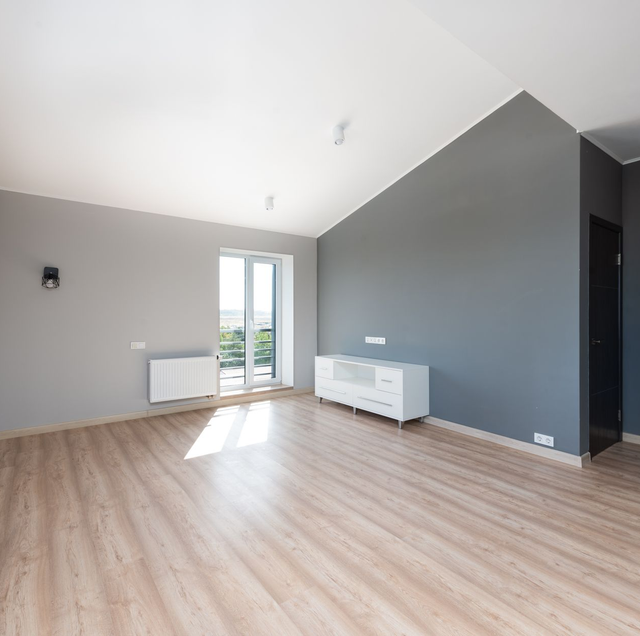
Quick Answer: Use flat or matte on ceilings and low-traffic bedrooms, eggshell in living rooms and most bedrooms, satin in hallways and kids' rooms, satin to semi-gloss in kitchens and baths, and semi-gloss or gloss on trim, doors, and cabinets. Higher sheen wipes clean and resists moisture but shows every wall flaw; flatter sheen hides flaws but scuffs and stains more easily.
Color gets almost all the attention when people plan a repaint, but sheen quietly decides how a room looks under real light and how it holds up to real life. Two walls painted the exact same color will read as different rooms if one is flat and the other is satin. Sheen is the amount of light the dried film bounces back, and that single property drives durability, cleanability, moisture resistance, and how loudly the wall announces every patch and roller mark.
What Sheen Actually Trades Away
Every step up the sheen ladder is the same bargain running in one direction. More sheen means a harder, tighter surface film that shrugs off scrubbing, resists moisture, and wipes clean. The cost is honesty: that reflective surface catches side light and throws it across every dent, seam, roller lap, and nail pop in the drywall. Flatter paint does the opposite. It scatters light instead of reflecting it, so imperfections disappear into a soft, even surface, but the same open, porous film that hides flaws also traps dirt and gives up under a wet rag.
Think of it as the difference between a chalkboard and a mirror hung on the same imperfect wall. The chalkboard swallows the wall's shape and shows nothing; the mirror hands back every ripple. Neither is better. They answer different questions, and the right question is always "what does this specific room have to survive?"
That is why one finish never fits a whole house. A hallway that gets shoulder-brushed and hand-smudged has different needs than a ceiling nobody touches, and a shower wall lives in a different world than a formal dining room.
The five rungs of the sheen ladder: Manufacturers name sheens a little differently, but the ladder is consistent from lowest reflectivity to highest:
- Flat / matte scatters the most light and hides the most flaws, with the least resistance to scrubbing.
- Eggshell carries a soft, low luster, close to a real eggshell, with modestly better washability than flat.
- Satin has a gentle pearl-like glow and takes light cleaning without complaint.
- Semi-gloss is noticeably shiny, sheds moisture well, and stands up to repeated washing.
- Gloss is the hardest, shiniest, most washable, and the most unforgiving of surface prep.
Ceilings And Low-Traffic Bedrooms: Flat Or Matte
Ceilings are the clearest case for flat. They sit in raking light from windows and fixtures, which exaggerates every taping seam and texture change, and nobody scrubs a ceiling. A flat finish erases that unevenness and keeps the plane looking calm. Guest rooms and formal spaces that see little handling can also take a matte wall, where the priority is a flawless look over ruggedness.
The tradeoff is real: flat marks easily and does not love a sponge, so it is the wrong pick for anywhere hands, furniture, or pets make regular contact.
Living Rooms And Bedrooms: Eggshell
For the walls you look at every day but do not constantly touch, eggshell is the workhorse. It keeps most of the flat's flaw-hiding softness while adding just enough surface tightness to take an occasional wipe. On the large, uninterrupted walls of a living room or main bedroom, that low luster stays flattering under lamplight and afternoon sun instead of spotlighting drywall seams.
If a household has kids or dogs living hard in the family room, the next rung up earns its keep.
Hallways, Stairwells, And Kids' Rooms: Satin
Traffic zones are where cleanability starts to outweigh flaw-hiding. Hallways collect hand smudges along the switch height, stairwells take shoe scuffs, and kids' rooms attract crayon and sticky fingers. Satin's tighter film lets you wipe those marks with a damp cloth without burnishing a shiny spot into the wall, which is exactly what happens when you scrub flat or eggshell too hard.
The catch is that satin's mild reflectivity starts to reveal wall imperfections, so these walls reward better prep, filling and sanding, before the finish coat goes on.
Kitchens, Bathrooms, And High-Moisture Walls: Satin To Semi-Gloss
Wet and greasy rooms are where moisture resistance moves to the front. Kitchen walls catch cooking splatter and airborne grease; bathroom walls face steam, splashes, and repeated wiping. Satin handles a powder room or a low-humidity kitchen wall well. For a full bath with a tub or shower, or a wall right behind a range, semi-gloss is the safer call because its tighter film sheds water and stands up to frequent cleaning without wearing thin.
Ventilation matters as much as sheen here. Running an exhaust fan during and after showers keeps moisture from sitting on the film, which is what eventually defeats even a moisture-resistant finish. The higher shine does draw the eye to any lumps in the wall, so smooth prep pays off again.
Trim, Doors, And Cabinets: Semi-Gloss Or Gloss
Woodwork lives by a different rule than walls. Baseboards get kicked and dusted, door edges get grabbed, and cabinet faces get opened with greasy hands hundreds of times a week. Semi-gloss is the standard for trim and doors because it takes that abuse and cleans up with a wipe, while its shine gives crisp edges a finished, deliberate line against the wall.
Cabinets and high-touch doors can step up to gloss for maximum hardness and washability. Gloss is the least forgiving finish of all, so every dent, brush mark, and sanding scratch reads clearly, which is why cabinet refinishing leans so heavily on careful sanding and smooth application rather than the paint alone.
How lighting changes the call: Sheen and light are a package. A wall that looks fine in a windowless interior room can look badly patched once low, raking light from a big window rakes across it. Rooms with strong side light or many fixtures push you toward a flatter finish to keep flaws quiet; darker interior rooms can carry more sheen without the surface turning into a flaw map. Checking a sample under the room's actual light, at the time of day the room is used most, beats guessing from a store chip.
Higher-sheen paint catches raking side light and shows every patch, seam, and roller mark, so on walls with strong window light or many fixtures, lean toward a flatter finish. Test a sample under the room's actual light, at the time of day the room is used most, before choosing the sheen.
A quick word on safety: Fresh paint releases fumes as it cures, so keep windows open and air moving while you work and for a while after. In any home built before 1978, assume the old layers might contain lead. Sanding or scraping that paint can release lead dust, so test first and bring in a certified pro for disturbing old coatings rather than opening it up yourself.
Frequently Asked Questions
You can, but paint chemists blend each sheen for a job, and a single choice forces a compromise somewhere. A common shortcut is a single low-sheen wall paint throughout plus semi-gloss reserved for all trim and doors, which covers most durability needs with only two products. The place that shortcut fails is a shower-adjacent bathroom wall, which still wants its own moisture-rated finish regardless of what the rest of the house uses.
On surfaces that get touched, yes, because the tighter film resists abrasion and washing, but there is a ceiling on the benefit. Two finishes at the same sheen from different lines can differ in scrub resistance because the resin binder, not the shine, determines how many wet scrubs the film survives before it wears through. Reading the product's stated scrub rating tells you more about longevity than the sheen name on the can.
Uneven sheen usually traces to the surface underneath, not the paint. Spots where filler or fresh drywall mud were sanded absorb paint differently than the surrounding wall, so they dry to a slightly different luster, an effect called flashing. Priming those repaired areas first evens out the porosity so the topcoat cures to one consistent sheen across the whole wall.
Almost always flatter, and often a purpose-made ceiling paint. Ceiling-specific products are formulated with very low sheen and a heavier body so they spatter less overhead and dry to a dead-flat plane that hides the seams overhead lighting would otherwise expose. Carrying a wall's eggshell up onto the ceiling tends to reveal every taped joint.
Beyond standard flat, some manufacturers sell an ultra-flat or "ceiling-grade" wall finish with even lower reflectance for older plaster and heavily patched surfaces. The tradeoff is that these deep-matte finishes are the hardest to clean of anything on the ladder, so they suit a low-touch adult bedroom or a formal room, not a space where marks need to come off later.
Paint feels dry in hours but keeps hardening for weeks as the film fully cures. Most latex wall paints reach full cure and safe scrubbing strength around two to four weeks after the final coat, so wiping a fresh mark before then can burnish or lift the film. Blot gently with plain water in that window and save any real scrubbing until the paint has finished curing.
Book a color and finish consult — get the right sheen in every room the first time. Cesar's Painting serves Minneapolis, St. Paul, and Bloomington. Call (612) 203-5856.
