
How to Choose the Right Paint Sheen for Every Room (Flat vs. Eggshell vs. Semi-Gloss)
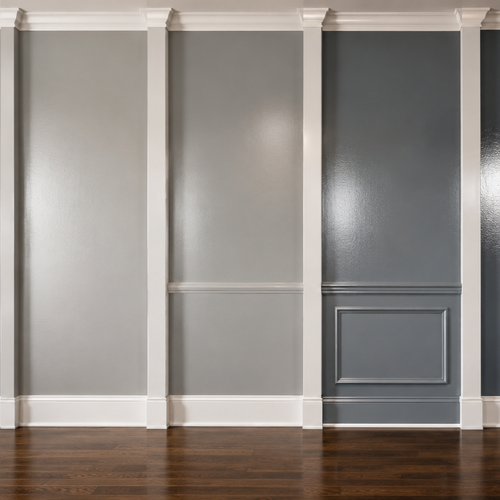
You paint the hallway a beautiful neutral gray. Three months later, there is a dark streak where someone's shoulder grazes the wall every time they walk past. It won't wipe off. The color is fine. The problem is the sheen — or the lack of it.
Most homeowners spend real time choosing paint color and almost none choosing paint sheen. That's backwards. Sheen determines how a room feels, how long a painted surface holds up, and whether you can clean off fingerprints or are stuck repainting every two years.
Here's what's actually happening when you pick a sheen level, and how to match it to each room.
What paint sheen actually measures
Sheen is a measurement of how much light a dried paint film reflects. It's measured as a percentage of light bounced back at a 60-degree angle — and that number is not just about appearance.
Higher sheen means a denser, harder film once the paint cures. More resin binders are packed into the formula, which is why semi-gloss can handle a soapy sponge without softening, and why flat paint scuffs when you press a thumbnail into it. The physics of the film directly controls how cleanable the surface is.
Flat paint reflects roughly 0–5% of incident light. Eggshell reflects about 15–25%. Semi-gloss sits in the 35–70% range. High-gloss pushes past 70%.
The full spectrum: from flat to high-gloss
Most paint brands offer six sheen levels, though naming varies. Sherwin-Williams uses "Eg-Shel." Benjamin Moore has a Pearl finish between eggshell and satin. Don't let the naming throw you — the sheen range is what matters.
| Finish | Approximate Sheen | Cleanability |
|---|---|---|
| Flat | 0–5% | Low — can't scrub |
| Matte | 5–10% | Low — lightly wipeable |
| Eggshell | 15–25% | Moderate — wipeable |
| Satin | 25–35% | Good — easily cleaned |
| Semi-Gloss | 35–70% | Excellent — scrubbable |
| High-Gloss | 70%+ | Best — fully washable |
Notice the gap between matte (5–10%) and eggshell (15–25%). That gap is real. Eggshell is meaningfully more durable than matte, not just a small step up.
The tradeoff: durability versus hiding imperfections
Here's what no paint chip tells you: the higher the sheen, the more every surface flaw shows.
A fresh coat of semi-gloss in raking afternoon light reveals every roller ridge, every drywall patch, every slight wave in the wall. Flat paint absorbs that light and hides almost everything — hairline cracks, patched nail holes, uneven texture, the slight high spots from old wallpaper adhesive.
Think of it like polishing a used car. The shinier you make it, the more clearly you see every ding.
That tradeoff is why prep work becomes more important as sheen increases. Painting trim in semi-gloss? The wood needs to be sanded smooth first. Kitchen walls in semi-gloss? Every uneven patch needs skim-coating. The paint won't hide what's underneath — it will highlight it.
Which sheen for which room
Ceilings
Flat. Always. Ceilings catch raking light from windows at every hour, which makes seams, texture variations, and patches visible. Flat absorbs that light. Paints formulated as ceiling flat carry extra titanium dioxide for maximum hide — Benjamin Moore Waterborne Ceiling Paint and Sherwin-Williams Ceiling Flat are both designed specifically for this. Never use eggshell or satin on ceilings; the reflectivity works against you.
Adult bedrooms
Eggshell is the standard choice. Low traffic, no cooking grease, no heavy moisture — so you don't need the durability of satin. The slight sheen of eggshell gives the wall a richer depth than flat without making the room feel clinical or cold.
Flat works in bedrooms too if you're after a matte, chalky look. The tradeoff is that scuffs from moving furniture or the headboard of a bed tend to be permanent without repainting.
Living rooms and dining rooms
Eggshell or matte. These rooms see moderate traffic but not the daily mechanical abuse that bathrooms or hallways take. A soft matte finish looks current; eggshell is the practical default because it handles an occasional wipe-down. Either is a reasonable call — choose based on how smooth your walls are.
Hallways
Eggshell or satin. Step up from bedroom eggshell here. Hallways take shoulder rubs, backpack scuffs, and the handprints of every person who has walked through carrying something. Satin holds up better to repeated cleaning without losing its finish. In a house with kids or pets, satin in the hallway is worth the slight extra cost.
Kitchens
Semi-gloss for walls near the stove and prep areas. Within about eight feet of a cooking surface, grease particles become airborne and deposit on the walls. Week by week, a thin, sticky film builds up that requires a degreaser to remove. Flat and eggshell cannot survive that cleaning cycle — the surface softens and the paint comes off the wall with the sponge. Semi-gloss handles degreaser scrubs without degrading.
For the far walls of a large kitchen that never see cooking splash, eggshell or satin is fine.
Bathrooms
Semi-gloss. Steam, condensation, and soap scum are the enemies here. The humidity that builds up in a Minnesota bathroom during a January shower — when outdoor air is at -10°F and the pressure differential between inside and outside pushes moisture vapor hard into the walls — demands a closed, tight film. Semi-gloss provides it. Satin works in bathrooms with strong exhaust ventilation; semi-gloss is the safer default for any bathroom without reliable airflow.
Sherwin-Williams Emerald Bath offers a satin finish specifically formulated with mildew-resistant additives — a reasonable choice if you want a softer look and have a well-ventilated space.
Children's bedrooms
Satin. Kids' rooms are where flat paint goes to die. Crayons, marker, food, scuff marks from toys — a satin finish is washable enough to handle most of that without being as glaring as semi-gloss. A crayon mark on satin walls wipes off with a damp cloth. On flat, it is there until you repaint.
Trim, doors, and baseboards
Semi-gloss, or high-gloss for a formal furniture-quality look. This rule applies universally, regardless of what finish you use on the walls. Trim takes daily mechanical contact — doorknobs, hinges, baseboards getting kicked, doors slamming. The film needs to be hard and cleanable.
Semi-gloss on trim next to flat or eggshell walls creates a natural visual hierarchy: the walls recede softly and the architecture reads forward. It is intentional, not an oversight, and it is how most professional painters approach an interior repaint.
Kitchen and bathroom cabinets
Semi-gloss at minimum, high-gloss if you want the factory-painted look. Cabinet surfaces see more daily abuse than almost any other interior surface — the edge of a cabinet door is touched hundreds of times a year, and the area around hardware takes grease, moisture, and physical pressure constantly. Low-sheen paints fail on cabinets faster than anywhere else.
The flat-versus-eggshell debate
The most common sheen argument in a painting conversation is flat vs. eggshell for main living areas.
Flat is popular with new construction builders because it photographs well, covers fast, and is cheap enough to use in spec houses. The problem is that it's almost impossible to touch up invisibly — a new brushstroke of flat paint over an aged flat wall shows as a visible patch, nearly every time. And it doesn't clean.
Eggshell costs about $1.50–$2.00 more per gallon than flat at retail. For an average room, the difference in material cost is roughly $5–$10. The durability difference is not close. A flat-painted wall in a lived-in home can look shabby within two to three years. Eggshell in the same room can go a decade without needing a full repaint.
Choosing flat to save money at painting time usually ends up costing more, because the room needs repainting sooner.
The one place flat has a legitimate advantage: older homes with imperfect plaster walls where eggshell would highlight every wave and dent. If your walls aren't smooth, flat is hiding something that eggshell would reveal.
A practical test from experienced painters — if you can see a wall imperfection from 36 inches away under normal lighting, eggshell will make it more visible. If you can only spot it at 12 inches under a work lamp, eggshell will be fine.
New washable flat products
One development worth knowing about: Sherwin-Williams Emerald and Benjamin Moore Aura now offer flat and matte finishes rated as scrubbable. These weren't possible a decade ago.
The scrubbability of a modern washable flat is not equal to semi-gloss — nothing flat is. But it's meaningfully better than a builder-grade flat, and it changes the calculation for adult bedrooms or feature walls where you want the matte look but can't afford to repaint every scuff mark. Emerald Interior flat runs $82–$95 per gallon; Aura flat runs $95–$110. A premium over standard flat, but worth it when the look matters more than the budget and durability still needs to be reasonable.
Dark colors and sheen
One thing that trips people up: dark paint colors amplify sheen. A deep navy in eggshell looks noticeably shinier than a soft white in the same eggshell formula.
The reason is the colorant. When dark tint is added to a base, the colorant shifts the resin balance of the paint. The resulting film reflects light differently. If you're choosing a deep, saturated color and you want the surface to read as matte, choose one sheen level lower than you'd normally pick — or test a sample on the actual wall before committing to the full room.
Frequently Asked Questions
Semi-gloss. Without ventilation, humidity after a shower can hit 80–90% and stay there for hours. That moisture pushes into the wall through any paint film that isn't tight. Semi-gloss is the only standard interior finish durable enough to handle repeated high-humidity exposure without peeling or developing mildew at the film level. If budget allows, a bath-specific semi-gloss with mildew-resistant additives is worth the upgrade.
On walls away from the cooking area, yes. On the wall directly behind or beside the stove — anywhere within four to six feet of the burners — you need semi-gloss. Eggshell can't survive the repeated degreaser cleaning those surfaces require. The film softens and lifts.
The wet paint film is reflective because water or solvent sits on the surface. As it evaporates and the binders cross-link, the surface texture develops — and that texture scatters more light than the wet film did. The sheen you see after 24 hours of full cure is the real sheen. What you see right after rolling is not a reliable indicator.
Flat paint is notoriously hard to touch up invisibly. Fresh paint looks different because the original coat has aged and its sheen has shifted. Best approach: feather the touch-up over a large area rather than dabbing a small spot, and use paint from the original batch if you saved any. On older flat-painted walls, a full single-wall repaint is often less obvious than a spot repair.
Yes, noticeably. The same color in flat vs. semi-gloss can look like two different shades once applied. Flat absorbs and deepens the color slightly; semi-gloss reflects light and makes the color appear brighter and cooler. Always test your color sample in the actual finish you plan to use — a paint chip in a different sheen is not a reliable guide.
No, though they're close enough to confuse. Eggshell (15–25% sheen) is softer and less glossy; satin (25–35% sheen) is harder and noticeably shinier. Eggshell is the standard for most interior walls in low-to-moderate traffic areas. Satin is better for hallways, kids' rooms, or any space that needs more frequent cleaning.
Cesar's Painting handles interior painting across Woodbury, Maplewood, St. Paul, Minneapolis, Bloomington, and the Twin Cities metro. Before any room gets painted, we walk through sheen selection with you so you're not repainting a hallway or kitchen in two years because the finish wasn't right. Call (651) 650-4747 to schedule a free estimate.
