
Can You Paint Vinyl Siding Without Warping It?
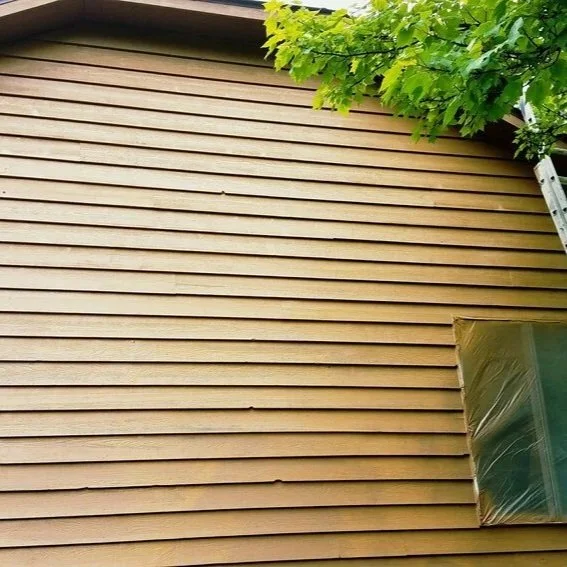
Your neighbor's house is the cautionary tale. The south-facing panels bow outward in the middle, rippling like they sat too close to a heat source — which, in a way, they did. Someone painted them a deep charcoal gray, and the summer sun did the rest.
Vinyl siding can be painted. It holds paint well when the prep is right, and a fresh coat usually costs a fraction of what new panels run. But warping and buckling happen when the wrong color or the wrong product absorbs solar heat faster than the vinyl can shed it. The physics here matter more than anything else.
Why vinyl buckles after it's painted
Vinyl isn't rigid like wood. It's made to flex — expanding in summer heat and pulling back in winter cold. That movement is built into the installation: panels float in their channels, overlap at joints, and leave small gaps at trim for expansion room.
The problem starts with solar heat gain. Every color absorbs some portion of the sunlight that hits it — lighter colors reflect most of it, darker colors hold it. The number that measures this is called the Light Reflectance Value, or LRV. It runs from 0 (absorbs everything) to 100 (reflects everything). Factory vinyl colors almost always land above LRV 55. That's not a coincidence — at that level, the surface temperature stays manageable even on a 95°F afternoon.
Paint the same panel a deep charcoal at LRV 20, and the surface can hit 160°F in direct sun. Vinyl starts to soften and deform in the 140–160°F range. The panel buckles not because the paint failed — it buckles because the vinyl underneath got soft enough to move.
This is why color choice is the most important decision in a vinyl painting project. Not the brand. Not the sheen. The LRV.
The LRV rule painters use to avoid warping
The rule: pick a paint color with an LRV equal to or higher than your original siding. If the existing panels are medium beige at LRV 62, the new color needs to hit LRV 62 or above. Going lighter is always safe. Going darker is where the trouble starts.
Some paint manufacturers have tackled this with heat-reflective pigments. Sherwin-Williams' VinylSafe line uses pigment particles that bounce infrared light even when the visible color looks dark. A VinylSafe color at LRV 45 behaves differently in afternoon sun than a standard color at the same LRV — the pigment sheds heat wavelengths that a standard pigment would just hold. Benjamin Moore's Regal Select REVIVE line is the vinyl-rated BM product with similar coverage for darker LRV ranges.
These products give you more color options. But they don't erase the rule — they shift the lower LRV threshold from around 55 down to roughly 35–40, depending on the formulation. Check the manufacturer's published LRV range for vinyl applications before you select anything below LRV 50.
| Color Category | Approximate LRV Range | Standard Acrylic on Vinyl | VinylSafe / Reflective-Pigment Product |
|---|---|---|---|
| Off-whites, creams | 75–90 | Safe | Safe |
| Light grays, tans | 55–74 | Safe | Safe |
| Medium grays, greens | 40–54 | Borderline — use reflective-pigment product | Safe with most formulations |
| Dark grays, navy, charcoal | 20–39 | High warp risk | Safe if within manufacturer's vinyl range |
| Near-black | Below 20 | Not recommended | Consult manufacturer — most still advise against |
What the paint itself needs to be
Color matters. So does the product. Vinyl expands and contracts by roughly ¼ to ½ inch per 12-foot panel across the temperatures it sees in a Minnesota climate — from January lows near -15°F to July surface temps in full sun. A paint film that cures rigid cracks at those joints and seams before the second winter even arrives.
The right product is a 100% acrylic exterior latex. Acrylic binders stay flexible after curing — they can give a little without cracking when the vinyl shifts underneath them. Oil-based paints and alkyd enamels cure hard. They grab initially, then crack as the panels flex through the seasons. And the freeze-thaw cycling from October through March only speeds up that failure.
Sheen matters less than flexibility. But a satin or low-luster finish holds up better than flat on vertical siding — flat finishes chalk and hold moisture faster on a surface that doesn't breathe the way wood does.
No primer is needed on clean, intact vinyl. If the siding is chalky from age, or if any section has been sanded or repaired, a bonding primer goes on first. Skip it on a chalked surface and the paint bonds to the oxidation layer, not the vinyl — and it peels within a season.
Prep that actually makes the paint stick
Start with clean vinyl. Road grime, mildew, pollen film, and oxidation chalk all create a barrier between the vinyl and the paint. Pressure washing and a scrub with a vinyl-safe detergent handle most of it. Anything still visible after washing gets dealt with before paint goes down.
Don't sand vinyl unless you're fixing a damaged section. Sanding leaves micro-scratches that trap water. A light pass with a fine Scotch-Brite pad works in a tight spot where adhesion is the concern — coarser abrasives dig into the vinyl surface itself, and that's not a fix.
Check for loose or cracked panels before you start. Vinyl that's cracked, pulled away from the J-channel, or lifting at the laps will trap water behind the new paint film. Paint doesn't fix structural problems. It seals them in. Those sections need to be re-secured or replaced first — paint goes on last.
Painting vinyl is like applying sunscreen to skin that's already peeling. It covers the surface, but the substrate underneath is already done. Fix that first.
What Minnesota weather does to this equation
South-facing and west-facing vinyl takes the hardest hit. South walls catch peak solar radiation from April through October — the highest UV load and the highest heat gain of the day. West-facing panels get the full force of afternoon sun, when air temperatures are already at their peak.
If you're moving to a darker color, those are the walls where warping risk concentrates. Running VinylSafe or an equivalent reflective-pigment color on the south and west elevations while using standard acrylic in the same color on north and east walls is something painters do when the color pushes toward the LRV borderline.
The freeze-thaw cycles from October through March add a different kind of stress. Water works into any micro-gap in the surface, freezes, expands, and wedges the crack open wider. A well-adhered 100% acrylic film on clean vinyl handles this without cracking — but only when the prep was thorough and the surface was dry when the paint went on.
Apply when daytime temps are between 50°F and 85°F, wind is low, and no rain is coming for 24 hours. Don't paint in direct sun on a hot afternoon — the surface skins over before the solvents can release, trapping them and causing blistering.
One thing that catches people off guard: vinyl contracts in cold weather, pulling panels inward and exposing a thin unpainted strip at the overlap seams that was hidden in warm weather. To keep bare seams from showing up in January, paint when the house is in its expanded state — late spring through early fall. On older or badly gapped siding, use a brush to work paint into the seam overlaps before rolling the faces.
Frequently Asked Questions
Most vinyl siding warranties cover repainting — but only if the new color meets their LRV minimums, typically LRV 55 or higher for standard products. Going below that threshold with a standard paint voids coverage for any warping or buckling that results. Check the warranty documentation for your specific siding brand before selecting a color.
With proper surface prep and a quality 100% acrylic exterior latex, paint on vinyl typically holds for 10 to 15 years before it needs refreshing. Adhesion tends to be better on vinyl than on wood because the surface doesn't absorb moisture — there's no substrate swelling to push the film off from below.
Not quite. Standard acrylic paint in colors below LRV 40 on south- and west-facing vinyl carries a real warp risk in direct sun. Sherwin-Williams VinylSafe and similar reflective-pigment lines push that floor down to around LRV 35 for most colors. True near-blacks (LRV below 20) remain risky regardless of the product.
Not if the vinyl is clean and in good condition. A bonding primer is needed when there's chalky oxidation on the surface, when sections have been sanded or repaired, or when any existing paint is peeling or flaking. On clean, intact vinyl, primer doesn't meaningfully improve adhesion — but skipping it on a compromised surface will cause the new paint to fail early.
For a typical house in the 1,500–2,500 square-foot range, exterior vinyl painting runs roughly $3,500 to $7,500 depending on story count, window count, surface condition, and color choice (VinylSafe and reflective-pigment products cost more per gallon). That compares to $12,000–$25,000 or more for full vinyl replacement on the same house. Painting makes strong economic sense as long as the existing panels are structurally sound.
Yes — spray with back-rolling is the preferred method for most vinyl profiles. The embossed texture on lap siding has channels and grooves that a roller alone can leave thin in. Spray application puts an even coat across the texture; back-rolling immediately after presses it into the channels before it skins over. Rolling-only on heavily embossed vinyl often leaves sheen variation that's visible in raking light.
The decision comes down to color
Vinyl is one of the more forgiving exterior surfaces to repaint — it holds paint well, prep is straightforward, and the substrate doesn't rot or absorb moisture the way wood does. Nearly every failure in a vinyl painting project traces back to color selection, not application. Pick a color at or above the LRV of the original siding, or use a reflective-pigment product built for vinyl, and the warping risk drops to near zero. Go darker without the right product, and the south wall will give you a clear answer by midsummer.
Cesar's Painting handles exterior painting and vinyl siding work across Woodbury, Maplewood, St. Paul, Minneapolis, Bloomington, and the Twin Cities metro. We verify LRV values for every color before paint goes on vinyl siding and walk you through the options at the estimate. Call (651) 650-4747 to schedule a free estimate.
